Lake Eola Heights
Lake Eola Heights / Garage Doors
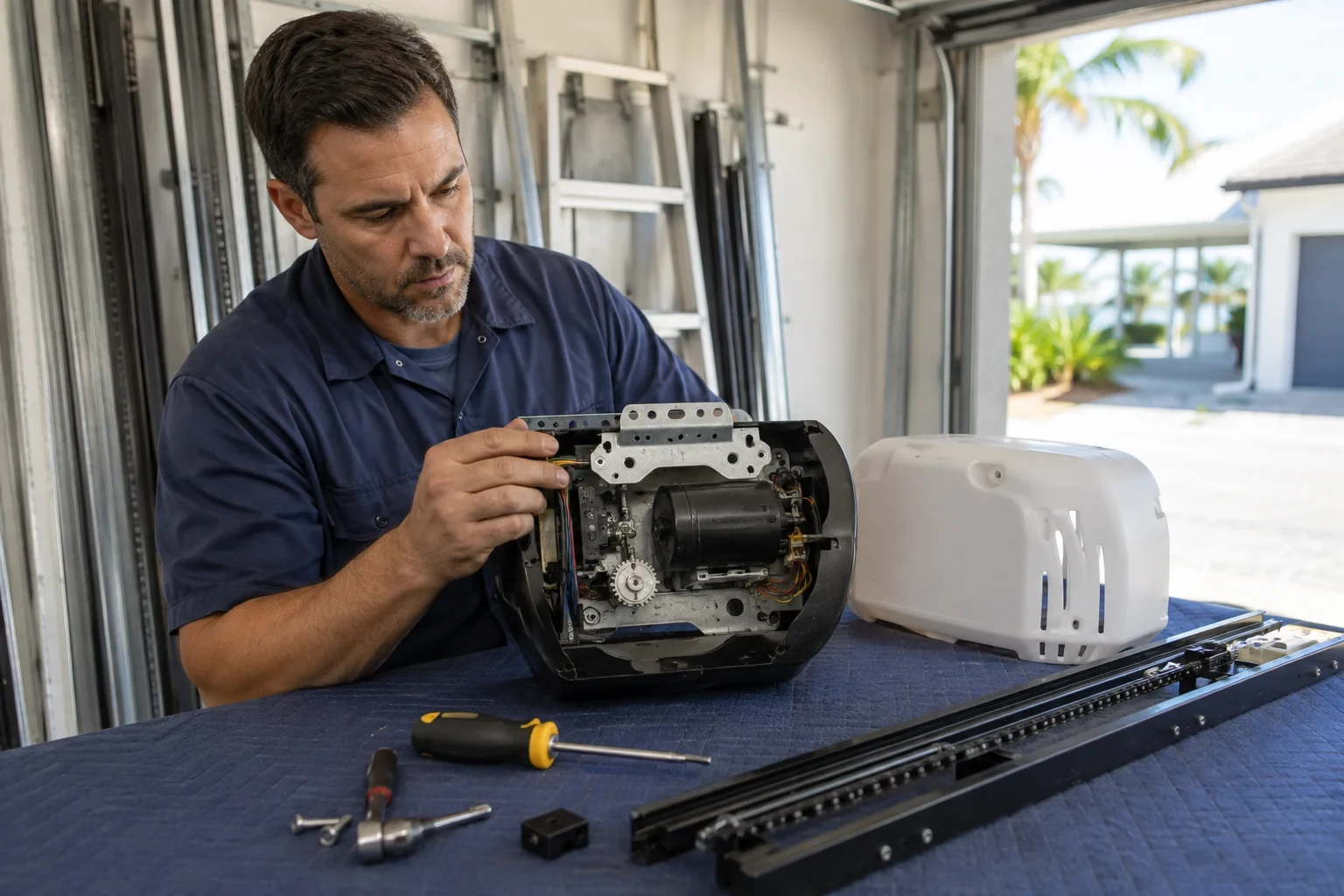
Garage Door Opener Diagnosis and Repair in Lake Eola Heights
The motor hums, stops, or runs without moving the door.
The short answer
Describe the response to each control and when the opener stops or makes noise. Ask the assessment to distinguish the door condition from power, control and drive faults, and request the findings supporting any component repair or opener replacement.
The symptom
The motor hums, stops, or runs without moving the door.
The proposed method
Describe the response to each control and when the opener stops or makes noise. Ask the assessment to distinguish the door condition from power, control and drive faults, and request the findings supporting any component repair or opener replacement.
Items to discuss
control board, capacitor, limit components, drive parts as needed. Clarify which parts or materials would be supplied, which tools would be used, and what documentation is included.
What shapes the quote?
Diagnostic scope
State which controls, power, drive and door-condition checks are included and what findings will be recorded.
Repair proposal
Keep parts and repair work separate from diagnosis until the cause and proposed scope are explained.
Completion record
Confirm the work completed, any unresolved limits and the applicable function checks at handover.
Ask for a written quote and confirm the complete charge before work begins.
Plan around your property.
Describe the address, equipment and access arrangements. The area directory does not establish availability for an individual address; confirm that when you call.
Useful references
DASMA · garage door safety ↗General guidance. Confirm the scope for your property.
Before you decide
Good questions.
Clearer next steps.
What does garage door opener diagnosis and repair involve?
Describe the response to each control and when the opener stops or makes noise. Ask the assessment to distinguish the door condition from power, control and drive faults, and request the findings supporting any component repair or opener replacement.
What should the proposal say about parts, materials and equipment?
Discuss control board, capacitor, limit components, drive parts as needed. Ask the provider to distinguish existing parts to inspect, proposed replacements, and tools, materials or reports included in the service. Request a reason for any replacement and confirm compatibility with your equipment. A list of possible items does not mean that every item must be supplied or replaced.
Should I repair the garage door or replace it?
Separate the door itself from the opener and its hardware. A worn roller, damaged seal or opener fault does not automatically require a new door. Ask which component failed, whether compatible parts are available and whether the panels, tracks and supporting hardware remain suitable. Compare a repair proposal with replacement only after the condition and scope are explained.
What details help identify an opener problem?
Describe what happens when you use the wall control and the remote, any unusual sound, and whether the door moves partway or stays still. If accessible without climbing or removing a cover, note the opener model. These observations help prepare the visit; they do not establish which part needs replacement.
What should I compare between installation proposals?
Compare the door material, insulation specification, panel and window style, hardware and opener compatibility. Ask whether removal of the old equipment, installation, adjustment and completion checks are included. For a property with wind-load requirements, ask for the product documentation and applicable installation requirements rather than relying on appearance.
Can a noisy door be diagnosed from the sound alone?
Sound is a useful clue, but several components can create similar symptoms. Describe whether it occurs at the start, near a curve in the track, or throughout travel. A useful assessment checks the door system before proposing parts, and explains the observed fault instead of treating every noise as an opener problem.
How do I prepare the garage for a visit?
Keep access to the doorway, wall control and equipment clear. Put pets and children away from the work area and gather any previous invoices or model information. Tell the provider about limited clearance, vehicles that cannot be moved or a door that is stuck before the appointment.
Does a humming opener prove the motor has failed?
No. The cited LiftMaster diagnostic chart considers door binding as well as opener components for a hum without movement. Ask which observations support the proposed repair for your identified model; the sound alone does not establish a failed motor.
What information is useful when the fault happens intermittently?
Record when the symptom occurred, which control was used, the door position and any visible indicator pattern. Share an existing photo or recording if available. Avoid repeated operating attempts just to reproduce a fault; explain what you already observed.
Can the same flashing pattern mean different things on different openers?
Use the manual for the exact model. The cited LiftMaster manual has its own diagnostic chart; it is an example, not a code list for every opener. Ask the provider to identify the chart used and the finding it supports.
What should a diagnosis report separate from a repair quote?
Request the observed fault, checks performed and unresolved limits, followed by the proposed components and work. If replacement is recommended, ask what finding rules out the proposed repair and whether any separate door or hardware work is included.
References for these answers
LiftMaster: 8365W and 8365W-267 owner manual (model-specific example) ↗
Photo gallery
Garage door trouble?
Tell us what it is doing and we will call you back.